



Our Magazine
The Reverso at 90: How a Polo Watch Became an Icon

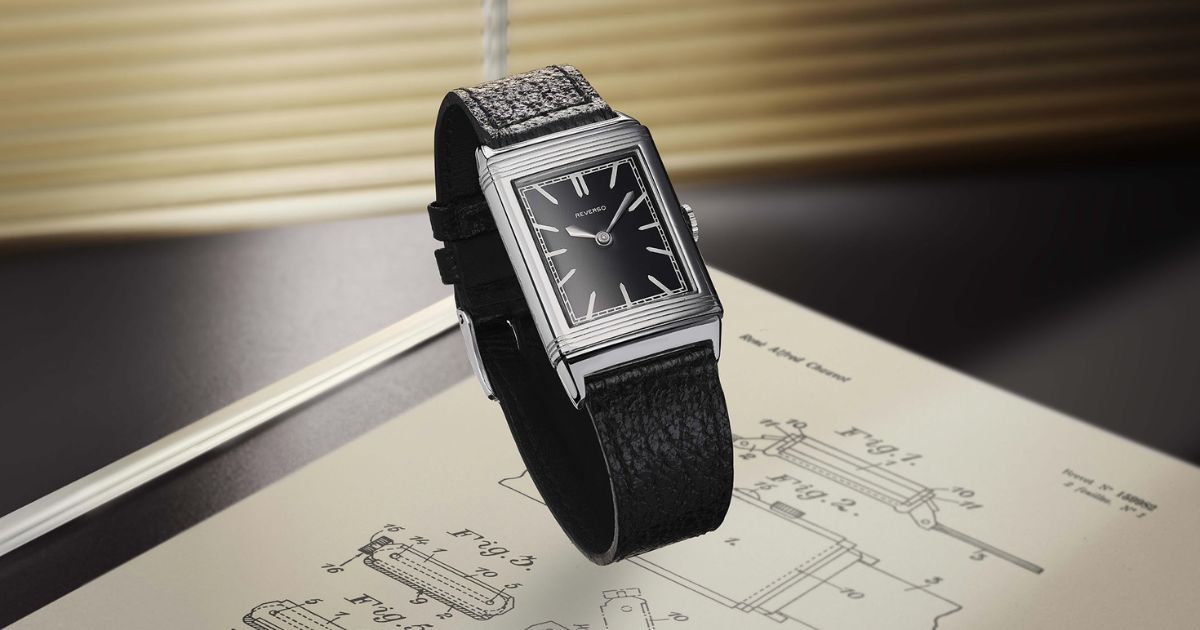
Ninety years ago, in the heat of an Indian polo match, a simple yet revolutionary idea was born. A watch that could face adversity—literally. What began as a pragmatic solution for sportsmen has, over nine decades, evolved into one of horology’s most enduring and elegant icons: the Jaeger-LeCoultre Reverso. Its journey is not merely one of telling time, but a masterclass in design adaptation, mechanical innovation, and timeless style. This is the story of how a watch for polo became a canvas for artistry, complexity, and personal expression.
Born on the Polo Field (1931-1940s)
The legend is now watchmaking folklore. In 1930, British army officers stationed in India challenged Swiss businessman César de Trey to create a watch robust enough to survive the rigours of a polo match. The fragile glass crystals of the era were no match for a flying mallet. De Trey took the challenge to Jacques-David LeCoultre, and together with renowned French designer René-Alfred Chauvot, they patented the “reversible watch” on March 4, 1931.
The genius was in the simplicity. Chauvot’s design featured a sleek, rectangular Art Deco case that could slide along its length, swivel 180 degrees within a robust carriage, and lock into place, hiding the crystal and dial against the wrist while exposing only a solid steel back. It was functional armour. The Art Deco influence was unmistakable: elongated lugs, bold vertical gadroons (the signature grooves), and a geometric purity that captured the modernist spirit of the age. Initially, the “Reverso” (Latin for “I turn around”) was not even its own brand; early models housed movements from LeCoultre and other Swiss makers. Yet, its identity was instant. It was the ultimate sports watch for the gentleman athlete—a tool of discreet, elegant resilience.
The Quiet Years & The Renaissance (1950s-1980s)
Post-World War II, as round watches and new sports models dominated, the Reverso’s production slowed to a trickle. By the 1970s, it was nearly obsolete, a relic of a bygone era. Its salvation came from an unlikely source: the Quartz Crisis. As mass-produced electronic watches threatened traditional mechanical watchmaking, brands began to look back to their heritage for uniqueness and soul.
In 1972, a Jaeger-LeCoultre executive rediscovered the Reverso design in the company archives. Seeing its potential, a limited re-edition was launched. The timing was serendipitous. The 1980s saw a growing appetite for classic, distinctive design and mechanical appreciation. The Reverso’s elegant, geometric form stood in stark, beautiful contrast to the era’s often-bulky steel sports watches. It was re-positioned not as a polo tool, but as a symbol of refined taste and intelligent design. The stage was set for its metamorphosis.
The Flipping of a New Leaf: The Personal Canvas (1991-Present)
The true rebirth, and the pivotal moment that cemented its icon status, came with the 60th anniversary in 1991. Jaeger-LeCoultre unveiled the Reverso Duoface. This was a conceptual masterstroke. The solid back was replaced with a second, complete dial—often showing a second time zone or a complementary display (like day/night or a small seconds). The watch was no longer just about protection; it was about offering dual personalities. One side could be classic silvered hours for the office; flip it, and find a stunning night-time guilloché dial for the evening.
This innovation unlocked the Reverso’s potential as a personal canvas. The solid caseback, once merely protective, became a field for exquisite personalisation:
- Grande Maison’s Métiers Rares: Jaeger-LeCoultre’s “Rare Handcrafts” ateliers transformed casebacks into miniature artworks. Enamelling (grand feu, cloisonné, flinqué), engraving (hand, machine, or laser), guilloché, and gem-setting turned the Reverso into a wearable gallery.
- The Triptyque & Beyond: The pinnacle of complexity arrived with models like the Reverso Triptyque (now Gyrotourbillon models), which featured a third display on the inside of the sliding case itself. This demonstrated that the reversible system was not a limitation but a playground for grand complications—tourbillons, minute repeaters, perpetual calendars, and astronomical displays were ingeniously integrated.
Why the Reverso Endures: The Anatomy of an Icon
- Timeless Art Deco Design: Its lines are eternally modern. It is neither overtly masculine nor feminine but possesses a profound, balanced elegance that transcends gender and fashion cycles. It is one of the most instantly recognizable watch silhouettes in the world.
- Mechanical & Metaphorical Ingenuity: The smooth, silent slide-and-swivel mechanism is a piece of satisfying, tactile engineering. Metaphorically, the act of flipping the watch is powerful—it’s an interaction, a moment of transition between one role and another, between public time and private contemplation or beauty.
- Unmatched Versatility & Personalisation: From a simple steel model to a gem-set haute joaillerie piece or a hyper-complicated masterpiece, the Reverso spectrum is vast. The ability to engrave or enamel the back makes it uniquely personal, a true heirloom in the making.
- Intellectual Heritage: It carries a story—of British officers in colonial India, of Art Deco brilliance, of near-extinction and glorious rebirth. Owning a Reverso feels like being a custodian of a rich chapter in watchmaking history.
For the Collectors & Enthusiast: Key References to Know
- Reverso Classique: The spiritual successor to the original, often in smaller sizes, embodying the pure, unadorned Art Deco spirit.
- Reverso Duoface/Duo: The game-changer. Two time zones, two faces, double the utility and style.
- Reverso Tribute: A contemporary series often featuring stunning dial colours, vintage-inspired typography, and monopusher chronographs, paying homage to classic design codes.
- Reverso Grande Complication à Triptyque: The apex of technical ambition, a horological marvel housed within the iconic case.
Conclusion: More Than a Watch, a Companion
The Reverso at 90 is no longer just “the polo watch.” That origin is its charming, foundational myth. Its true identity is far richer. It is a shape-shifter, a canvas, a mechanical marvel, and a design statement. It teaches us that the most iconic objects are often those that solve a specific problem with such elegant intelligence that their utility evolves into poetry.
It offers a quiet dialogue with its wearer. In a world of constant notification, the simple, deliberate act of flipping the Reverso to check its other face—or to simply protect it as it was first intended—is a moment of considered pause. It is a watch that doesn’t shout; it reveals. And after ninety years of revelations, its story, like its elegant, reversible case, feels more compelling than ever.